RECEIVES €150,000 FROM THE GROWTH FOR INNOVATIVE ENTREPRENEURS FUND
Founded in 2013, the company believes that “it is possible to go global from Asturias” and that small companies can be an alternative to traditional business models.
“Managing growth is just as important as achieving it. We wanted to be confident that our order book was strong enough to take on the SRP loan, while also ensuring that the company was ready to absorb and make the most of those resources.” This is how Carlota Abello explains why Dogram waited until last year, several years after its foundation in 2013, to apply for support from the SRP. The funding has enabled the company to incorporate new technologies and three additional professionals, who have joined the four founding partners to meet international demand.
– How did the company come about?
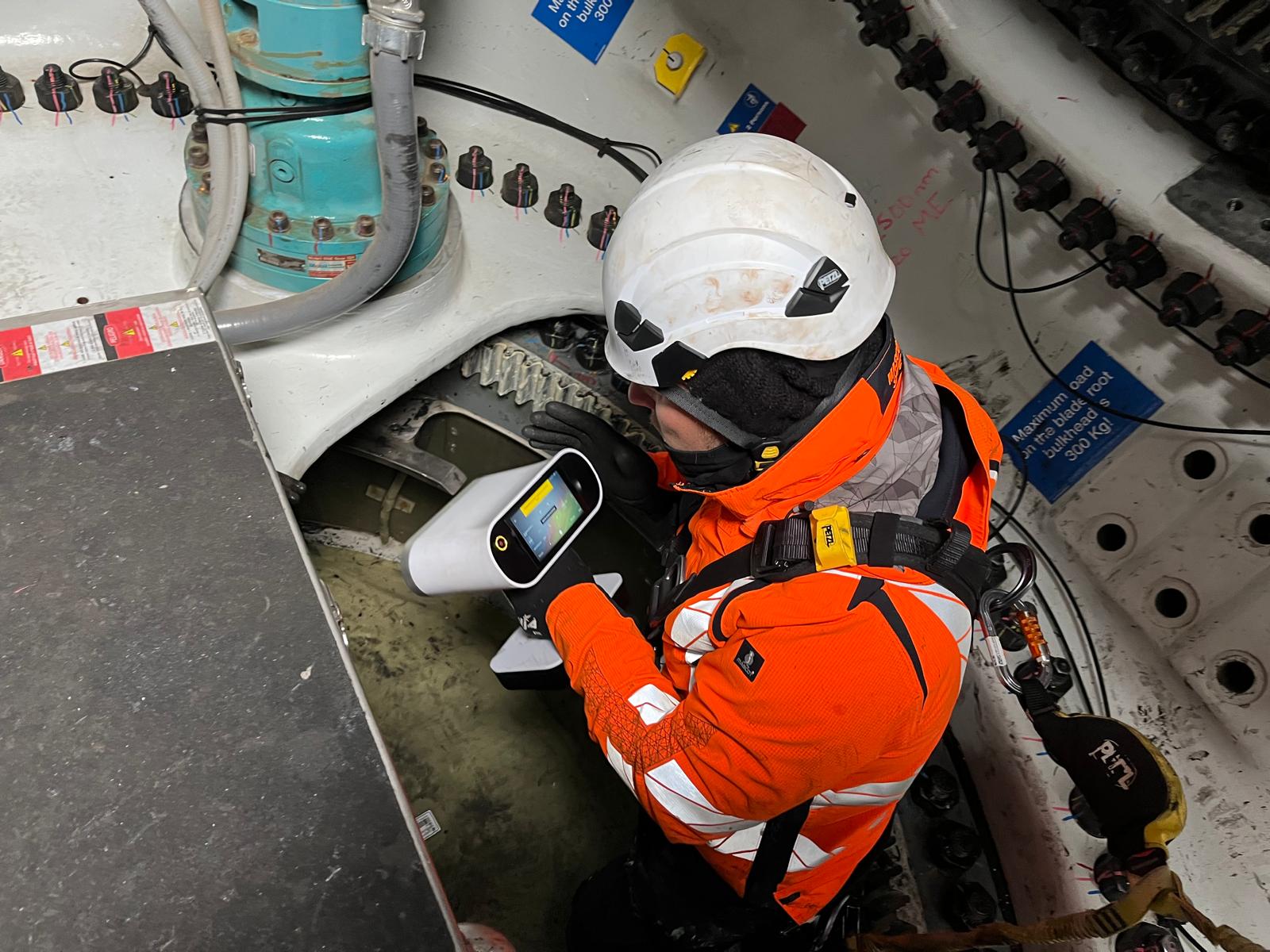
– Dogram was founded in October 2013 by the four founding partners, who began working on the company with the aim of applying the most advanced techniques for capturing reality for the purposes of measuring or visualizing objects and structures, from a piece of art the size of a tooth to an entire cathedral. Our idea was to help all those professionals who need to know the exact data in order to document something, restore it or design modifications. Using advanced photogrammetry or laser scanning techniques, among others, we can improve accuracy and therefore the work carried out in these fields. As for our backgrounds, we initially came from engineering and physics, and were between 26 and 36 years old.
– How did you come to apply for SRP loans, and what did they mean for the company?
– We carefully considered the timing, both because of the rigorous assessment process carried out by the SRP evaluators — including both the technical team and the investment committee — and, above all, because of the importance of taking on that debt commitment. We analyzed in detail what the right moment would be. Managing growth is just as important as achieving it. We wanted to be confident that our order book was strong enough to take on the SRP loan, while also ensuring that the company was ready to absorb those resources and maximize their use. The investment went into equipment and people. In this regard, we have been able to acquire new technology that makes us more versatile and capable of carrying out a wider range of projects, as well as adding three more professionals to the team to meet the demand for work coming from different parts of the world.
– Have you received any other financial support from another public administration?
– In our early stages, we benefited from some of the support programmes available to technology-based companies in our region. The IDEPA calls specifically aimed at this type of company have undoubtedly been an essential boost, particularly for innovative companies and service providers that need time to establish themselves in the market, become known and generate the virtuous cycle in which we are now immersed. The fact that major multinational companies in the energy, oil and nuclear sectors now work with us would not have been possible without the support we received from the public administration during those early stages.
– Do you consider Asturias to be a good place to start a business?
– The key is having a solid business idea. If your value proposition is strong, things can be achieved. Asturias is as good a place as anywhere else to try to develop a business model that can grow sustainably. The entrepreneurial ecosystem — by which I mean everything related to the ease of setting up a company, financing, visibility, etc. — is reasonably good. Having close access to the key decision-makers who can support you at the beginning, such as the CEEI or IDEPA in our case, is undoubtedly a positive factor. You have a “direct line” to everyone. The same applies to potential customers. We had very good access to them when testing our proof of concept. Doors were opened to us. And that is possible because of proximity.
Could it be improved? Perhaps the most relevant issue, which involves a cultural change, is that in a predominantly industrial region with a tradition spanning many decades of large public companies and multinational corporations employing thousands of people, it is important to encourage the mindset that it is worth trying to build something on your own. In other words, fostering an entrepreneurial culture from childhood. On the other hand, we are also somewhat isolated in terms of transport connections, whether by air, rail, or other means.
– What does your company contribute to this necessary change in mindset in the region, and what does innovation mean for your business?
– Cases such as Dogram demonstrate that it is possible to go global from Asturias. Even if you are relatively far away, even if you are small and things may be somewhat more difficult, a solid value proposition based on continuous improvement, excellence and the adoption of the latest technologies can enable you to make progress in the business world. Small companies like ours can grow and become an alternative to the loss of jobs associated with more traditional business models that are threatened by globalization.
Innovation is key. Not only in the techniques used to capture data, but also in how that data is processed. Or in improving a process to monitor the progress of a project we are carrying out. Any small improvement — the possibility of implementing innovation is everywhere — can make you more competitive or improve your profitability. In our small company, we have recently introduced a performance management system as part of our quality policies and ISO standards, under which we are certified. It includes a specific section for all Dogram professionals in which they are assessed based on the innovative contributions they make to the company, regardless of their position within the organization.
Source: El Comercio